

By Berit Mason
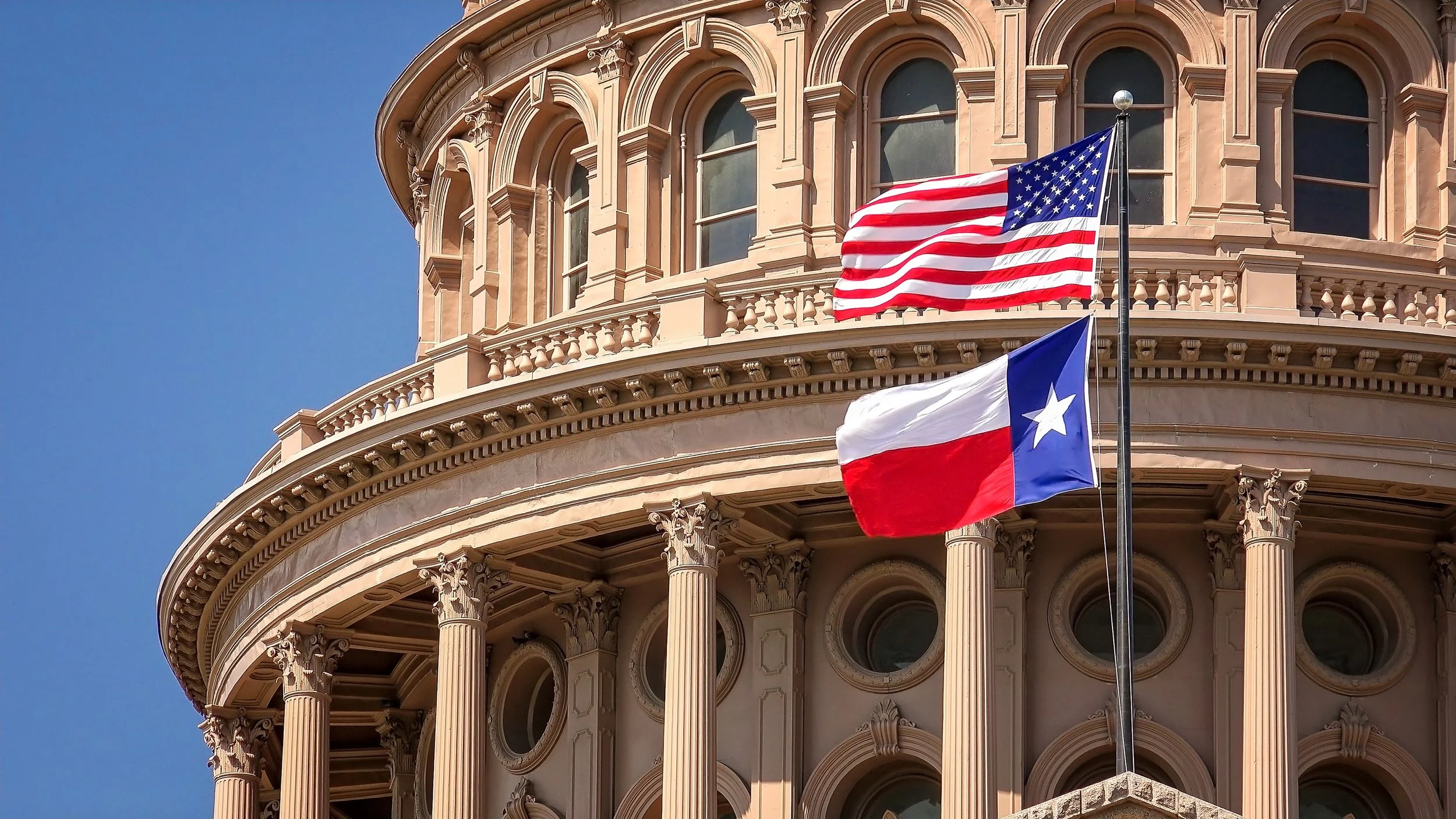
The 2025 quorum break erupted when Governor Greg Abbott called for a July special session to attend to issues left over from its bi-annual convocation. They would address disaster relief funding, flood preparedness, property tax reform, hemp product regulation, restrictions on transgender people, and a congressional redistricting plan.
But Democrats cried out when the topline of the agenda was redistricting. They were astonished that this irregular call for new maps took precedence over flood preparedness plans, as Texas still grappled with 138 dead, citizens swept to their deaths in July flooding.
Republicans insisted on voting on an unscheduled redistricting plan first. Texas Democrats then accused them of wanting to gift President Donald Trump five extra US House seats in the midterms, to assure his lock on Congress.
So, on Sunday, August 3rd, Democrats fled Texas for safe haven blue states to block that vote, because without a quorum, Republicans would not be able to vote on any new maps.
Retired San Antonio College history professor, John Fagin, M.A., explains, “The constitution provides that a census has to take place every 10 years, and traditionally, the parties wait until that 10-year period is over before they redraw the constitutional state maps, for representation. But here we have the Republicans doing this in the middle of a census year. This rarely happens.”
Sometimes shaking, sometimes stern, Texas House Democratic Caucus Chair Representative Gene Wu stood at a lectern before hundreds of flashing cameras and news crews. He stated that the quorum break was “a fulfillment of my oath,” to oppose “racist gerrymandering.”
Abbott then appealed to the Texas Supreme Court to fire Wu.
Former US Democratic Congressman and practicing attorney, Charlie González, labels the redistricting effort as “abuse.”
“The reason you see the desperate current mid-decennial redistricting is that President Trump recognizes that the 2026 elections will be a referendum on his policies and will result in the election of a Democratic House majority. The House then looms as the only check on his legally questionable exercise of power.”
Former US Democratic Congressman Charlie González
After the 50 democrats returned to the Capitol for the August-September Second Special Session, the majority Republican House passed the redistricting bill, and the Texas Senate approved it, sending it on to Abbott.
If the minority political party in Texas flees to prevent a quorum, it is exciting; it is disruptive. It is inconvenient. It can even seem childish.
But in a land of Citizens United party politics, quorum breaks feel like democracy in action, maybe what it was like in 1870 during the first one. Back then, 13 senators walked out to block a bill giving Governor Edmund J. Davis expanded wartime and police powers during Reconstruction. They were arrested, and the bill passed. But they bequeathed to future minority politicians a most alluring tactic.
Other quorum breaks were in 1979, 2003, and 2021.
The 1979 walk-outs were nicknamed the “Killer Bees.” Democratic senators took off to block a vote on an election bill, hiding out for four days while, occasionally, people wearing Killer Bee T-shirts protested around the Capitol. The senators eventually successfully blocked the bill.
When the 21st century rolled around, terrorism struck US soil, and political and economic divides grew wide like the Grand Canyon.
In 2003, Democrats high-tailed it to New Mexico and Oklahoma to block redistricting and failed. In 2021, Texas Democrats failed to block voting restrictions.
González says the Dems must get tougher.
“Failure to respond in kind has become necessary if Democrats are to avoid being a permanent minority in the US House of Representatives due to the Republicans’ abuse of power.”
Fagin explains why Texas Democrats resorted to the tactic:
“It is pretty difficult to be aggressive because the party that is in control of the legislature has all of the power.” Fagin continued, “But apparently, there is a movement to strip all of the Democrats from the committees. That means the committees would be all Republican, and the Democratic party will have no input as to what comes out of the Texas legislature.”
Dr. Laura Barberena is a San Antonio Democratic political consultant who says Democrats are just trying to remain respectful.
“We still believe in democracy and decorum, and at the end of the day people want to see policies get done, and they want to see improvements in their lives.” But, “Senator Roland Gutierrez has had some pretty colorful posts on his social media feed.”
Social media has enlivened political debate but widened the political divide, as virulent online posts are the ones that get clicks and views, earning their posters big money.
A rising star among Texas Democrats is Representative and Presbyterian Seminarian James Talarico, a teacher from Round Rock.
“He just announced his bid for the US Senate,” says Dr. Barberena. “He is someone who uses not just civil language, but Christian language. I think he is really connecting with voters using that kind of vernacular.”
And that is “fighting fire with fire,” employing religiosity, a Texas political bedrock.
The strategist says ahead of 2026, Democrats will focus on “kitchen table issues,” like the cost of electricity, gas, food, and workers’ wages.
“I think you’re going to see them go back to economic justice, and what that means,” pounding the table, for example, on affordable housing, directly linked to rising homelessness.
“These aren’t radical ideas that you want to be able to work a job and make enough money to pay your rent. That is not some kind of radical notion.”
“We still believe in democracy and decorum, and at the end of the day people want to see policies get done, and they want to see improvements in their lives, but Senator Roland Gutierrez has had some pretty colorful posts on his social media feed.”
Chair of the Republican Party of Bexar County Kris Coons says the quorum break was a “dereliction of duty.”
“The idea of leaving your job and fleeing the state for states that literally have the worst gerrymandering in the country, as a form of protest, was to me not only unprofessional but quite immature.”
Neither were they on hand, Coons says, to help address camp emergency preparedness bills, and new Texas camp cabin requirements.
“They weren’t here to help with any of that.”
Bexar County Republican Chair Kris Coons
Articulate and assertive, Coons says her party is simply protecting fair representation of their constituents, like the 35th Congressional District, where minorities are the majority.
“It is still 58% Hispanic heritage, 32% Anglo, and 10-11% African-American and other. So, I am not really sure who is being disenfranchised here.” Additionally, the maps would reflect any illegal emigration coming across the border. She says though some areas may be “compact” with Republicans, those sample demographic statistics as cited prove the maps are fair.
How does she characterize Democrats?
“These are hardline extreme Democrats, with absolutely no intention of crossing over the aisle to try and work with us in any way.”
Republicans are true believers.
They are well-organized, now focusing on educating very young voters about the party.
“We’re even working on high schools … implementing that right now, to have programs ready to talk to people in high schools about the party, and the direction we are moving in.”
“They are starting their young lives, and we have to make sure they are engaged enough so that they know all of the information, they know who the candidates are …”
Though among them may be divisions on certain issues, Republicans are loyal and hard-driving. Like Coons, they’re dynamic, faithful, and unapologetic.
Texas was once blue, our last Democratic governor the feisty Ann Richards. She lost to Republican George W. Bush in 1995, and it’s been Republican governors since.
“But even after that, there was this relationship between the two parties, a more cordial relationship, even with the Republicans becoming dominant in the legislature,” says Fagin.
Once champions of labor and workers, Democrats picked culture war fights. Once the stately GOP, that party became angry mob MAGA.
“This is true on the national level as well as on the state level,” he says.
And the political assassination of right-wing YouTuber Charlie Kirk, and the political killing in June of Minnesota Democratic state representative Melissa Hortman and her husband, makes one wonder if we are not approaching some kind of political civil war.
“I left Congress in 2012,” says González, “because many of the newly elected Republicans in 2010 went to Washington with no intention of making the federal government work for the people …”
The son of the late civil rights champion, congressman Henry B. González, says the parties have their dukes up, no longer arguing as opponents but fighting as enemies, while the welfare of the people is lost in the fray. ■
