
UT San Antonio’s Institute of Texan Cultures Re-Opens Museum to Join a Downtown Renaissance
By Berit Mason
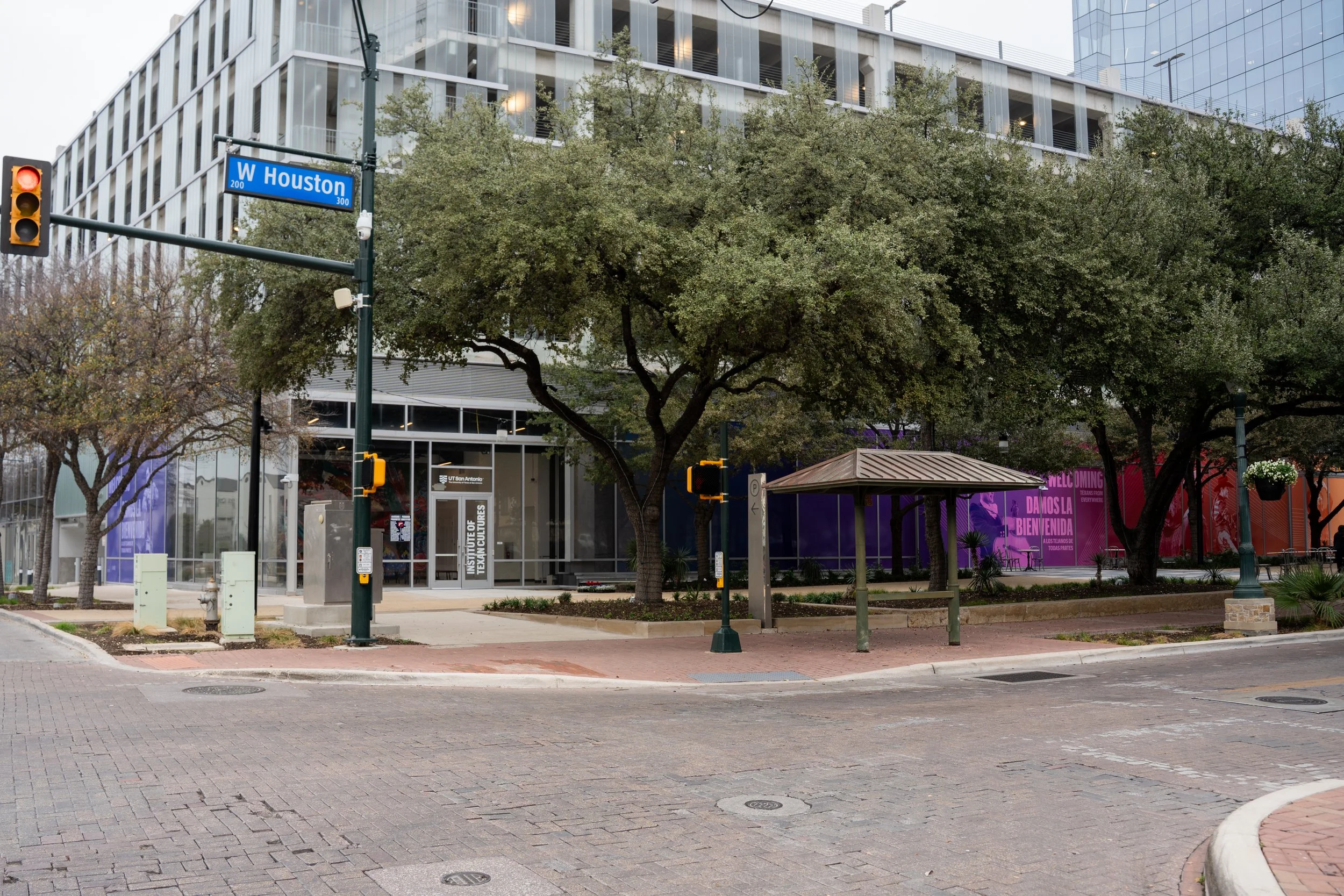
The ITC's new home, located along W. Houston; photo courtesy of Institute of Texan Cultures
Anyone who’s moved houses knows it is a hateful job. But imagine packing up and carting around 180,000 square feet of stuff.
Last year, staff at UT San Antonio’sInstitute of Texan Cultures moved 57 years worth of historical antiques, photographs, and costumes from Hemisfair’s Texas Pavilion to their new home at the Frost Tower, 111 W. Houston St. Head Curator Bianca Alvarez said it was a hands-on job.
“We contracted professional object handlers, and packers, and movers, to be in alignment with museum best practices. The fragile stuff was handled very carefully, papers, archival, and ephemeral materials,” Alvarez shared. Many of the contents had to go into storage.
“We couldn’t bring all of our collection. So, we have a newly constructed, climate-controlled facility, the Archives and Collections Building in Leon Valley,” she said. Afterward, everything had to be documented and photographed. Associate Vice Provost of the Institute of Texan Cultures, Monica Perales, says their new chapter at the Frost Tower downtown is bright and promising.
“We see this as an opportunity to continue to connect with the public, to connect with new audiences through wonderful storytelling, through engaging exhibits, Alvarez said. “We are building on years of tradition and scholarship and work, carrying that forward.”
Tourists strolling downtown will be attracted to its gleaming glass entrance at the corner of West Houston and Camarón Street.
“Our front door looks out to San Pedro Creek,” said Perales, “A connection to our history as a city. We are excited to be in this culturally rich part of downtown. Just in the short time we’ve been in here, it’s nice to see more activity.”
The San Antonio Stock Show and Rodeo’s Western Heritage Parade hoofed right past, while the Briscoe Western Art Museum is a half-mile away.
The former Texas Pavilion was among the last surviving structures of the World’s Fair. It was a prime example of concrete Brutalist architecture, béton brut. Architect William M. Peña used the “Earth Berm” style, creating an inverted pyramid look. Now it’s a bygone building, relegated to archival photos housed within the ITC.
The Conservation Society of San Antonio sued to stop its demolition but lost, even though it was listed on the National Register of Historic Places.
But a museum stepping aside for a downtown sports and entertainment district, as the ITC did for Project Marvel, is not unusual; arts and culture typically receive less support than sports.
Proof of that is in the November 2025 annual report of the American Alliance of Museums, where:
A survey of 511 museum directors showed that over half of U.S. museums are seeing fewer visitors than in 2019
Nearly one-third of cultural institutions report decreased attendance in 2025
The AAM states that weaker travel and tourism numbers hit the industry hard, and the current administration’s “executive orders and federal actions” cut deeply into 2025 museum budgets.
Further, a third of museums saw government grants and contracts canceled by the very institutions that support them: the National Endowment for the Arts, the Institute of Museum and Library Services, and the National Endowment for the Humanities. Donors and philanthropists take note.
ITC donor Danny Bryant is loyal to the ITC. He was a 10-year-old who had a ball at Hemisfair ’68.
“So, I was very interested to see what’s new here. And — it’s gorgeous.
The mural out front is gorgeous, ”Bryant emphasized. “Plans with rotating exhibits, partnering with neighbors for outdoor events, sounds like a lot of fun.”
Bryant’s wife, Melinda, loves ITC’s inaugural traveling exhibit, “Mumentous: The upsizing of a Texas Tradition.”
“I love the Texas mums. I remember those in high school,” recalled Melinda.
It’s a bright display of all sorts of mums, homecoming chrysanthemum corsages decorated with trinkets, ribbons, and bells.
Guests wore free mums at the crowded press event held the day before the grand reopening on Jan. 29, where an outdoor canteen served VIPs and the media hot coffee, and red, white, and orange cookies, the official colors of UT San Antonio.
ITC leadership knows presenting 19th and 20th-century history in a physical space means getting people offline and off the couch. So before an exhibit was dismantled, staff filmed its every angle, to be featured in virtual tours.
“It’s a trend we observed in the museum field, trying to bring people back into the museum space,” Alvarez said. “We are so used to consuming materials online. So, in our main gallery, we have interactive kiosks, ‘Discovery Stations,’ which [allow] us to expand our footprint, sharing a fuller story in a digital capacity.
“So we hope with these different approaches, sharing glimpses of what the museum looks like on the inside, to pique curiosity, and bring those visitors indoors,” she said.
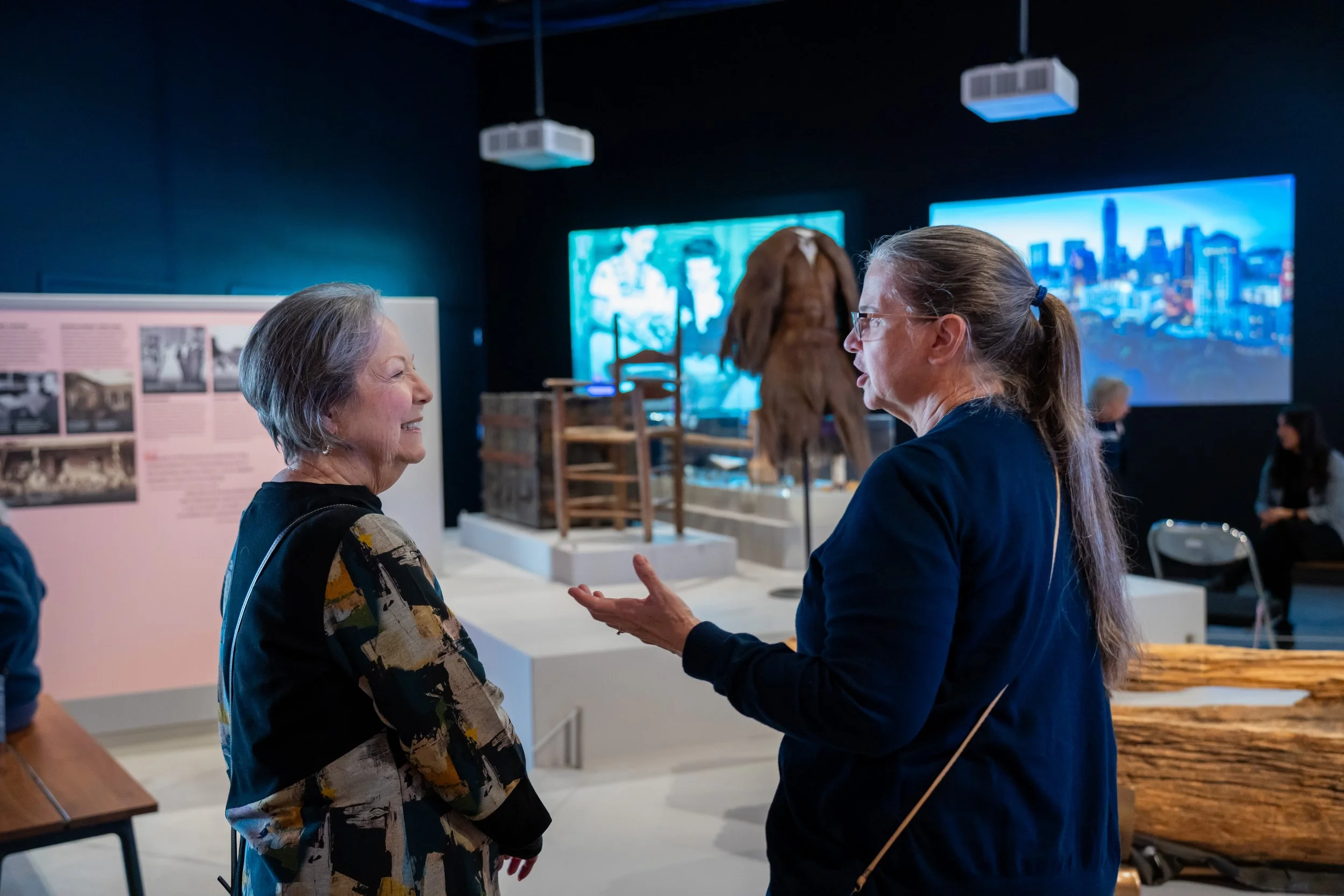
The Institute of Texan Cultures is now just two huge galleries: one for permanent collections, and the second for traveling shows. The main gallery opened with “Common Threads.”
The myriad of cultural, agricultural, and industrial factors that shaped the Lone Star State are presented. Additionally, immersive and interactive displays, textiles, clothes, and cultural artifacts chronicle how we grew.
Trish DeBerry is President and CEO of Centro San Antonio, a public-private partnership helping drive downtown’s renaissance.
“As we look at the Houston Street corridor, it has the opportunity to become a cultural museum corridor,” she says, like downtown Houston’s Museum District, where major museums cluster so visitors can stroll about for richly cultured afternoons.
“With the opening of the Alamo in 2028, the San Antonio African American Archive Museum, the 100th anniversary of the Majestic Theater and its performing arts history, add the ITC to the equation, and the Alameda, which is right here—it’s an exciting time,” DeBerry said.
However, as enchanting as the new place is, with tall ceilings, elegant interiors, and glass walls where sunlight pours through, the location is considered temporary until a permanent home is found.
Meanwhile, museum leadership is making good use of their time, applying for museum accreditation with the American Alliance of Museums to bring Smithsonian-related exhibitions.
Though its container, the Texas Pavilion, is gone, ITC’s history lives on in its docents, like Joanne Duming, a 20-year docent.
“We realized our building was getting old, and we hoped we could keep it. But we docents trusted the people who were in charge to do the right thing — and they have done it,” said Duming.
Duming guarantees the volunteer staff know their stuff.
“All of us are researchers,” she said, as some are retired teachers, apt in learning and doing in-service. “Because I promise you, someone will call you on it if you don’t know.”
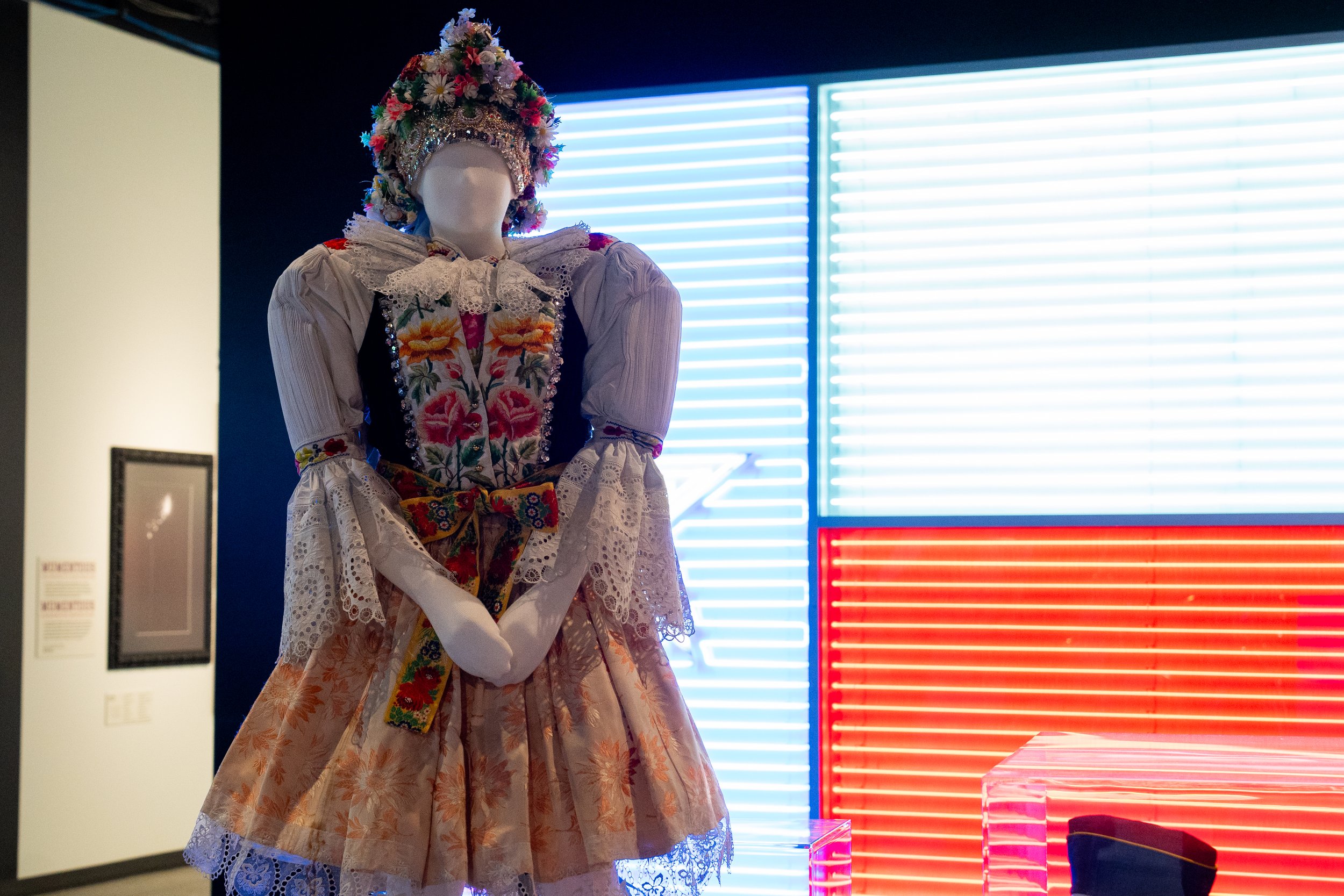
Duming and the big neon Texas flag anchor the ITC to its new home, welcoming newcomers with light and broad smiles.
“People were as welcoming to us as we were of them. They took pride in what they saw. It made me extremely happy. I loved it,” Duming explained. ■