

There and Back Again: A Ron’s Tale
By Nick Blevins
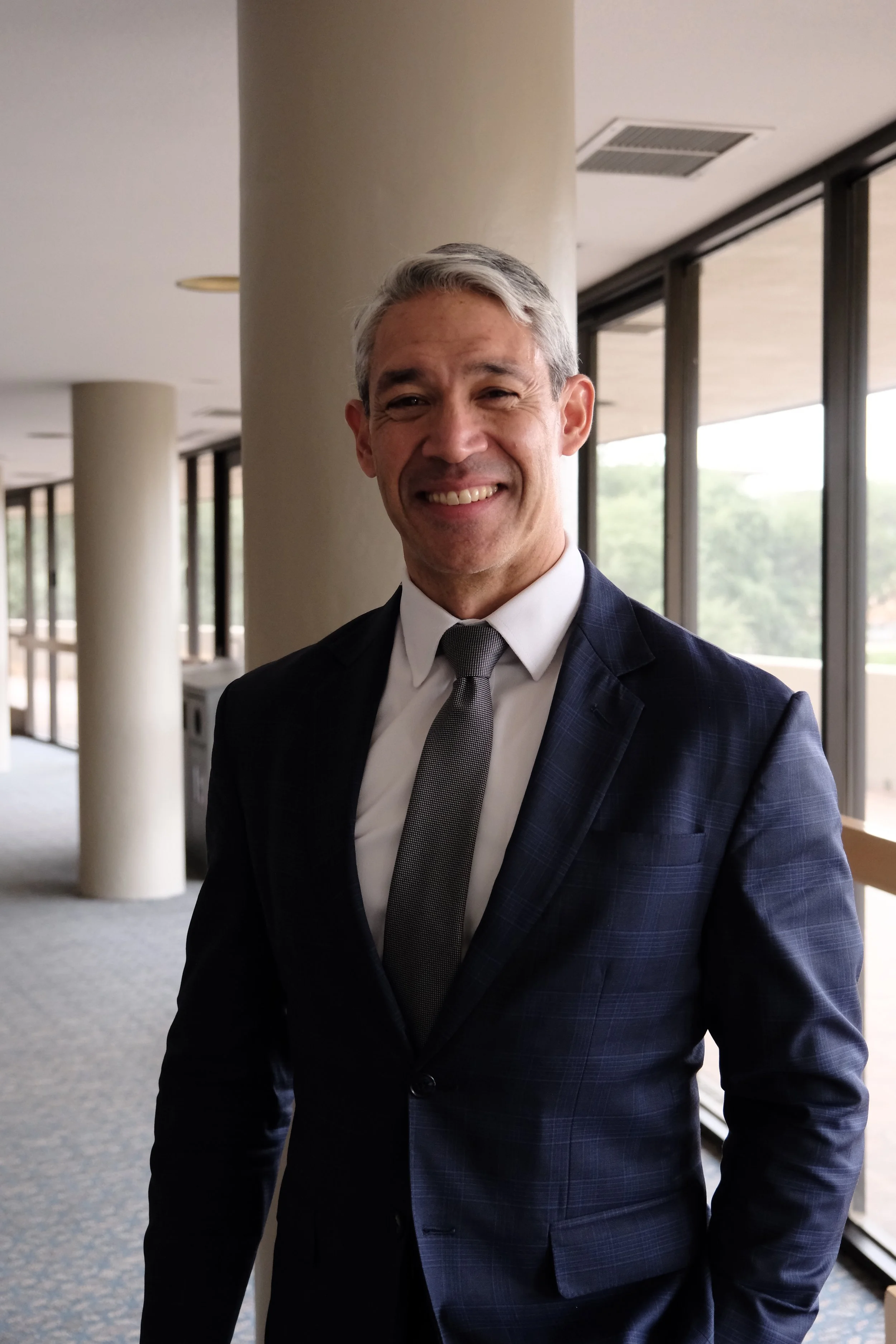
It was a blustery, early December afternoon at Trinity University’s Laurie Auditorium. I’d come to interview former Mayor Ron Nirenberg about his memoir coming out in the spring, Nirenberg: The Education of a Public Servant; and I was a little lost. Having finished the book a few days previous, my head was full of a lot of information, and a bundle of questions I was actively reworking along my walk.
I was wrapping up my second unintentional lap through the building’s circular halls searching for Nirenberg’s office, where the summa cum laude Trinity alumnus now serves as the school’s Professor of Practice in Communication, when a friendly faculty member emerged from one of the rooms and pointed me in the right direction. With a few minutes to spare before our scheduled meeting, I sat on a bench outside his office, preparing my notes and glancing out of the floor-to-ceiling windows at the campus and Hildebrand road spread below.
A moment later, Nirenberg appeared walking down the hallway, finishing a phone call. We exchanged quick greetings as he unlocked his office door, then stepped inside. Unassuming and rather spartan in decor, the space was bereft of some of the commemorative trappings one might expect from someone with a career trajectory like his. After all, this wasn’t his first time back at the school; before he’d held an elected position, he was the general manager at KRTU 91.7, Trinity’s — and San Antonio’s — premier Jazz radio station, and played an instrumental role in making the station the sonic institution it is today.
During our conversation, we touched on a range of topics, from his childhood and experiences as a teacher, to his thoughts on the direction of AI and German club music. It was an engaging, fascinating discussion with one of our city’s longest-serving mayors about a career dedicated to public service, and the life that surrounds it.
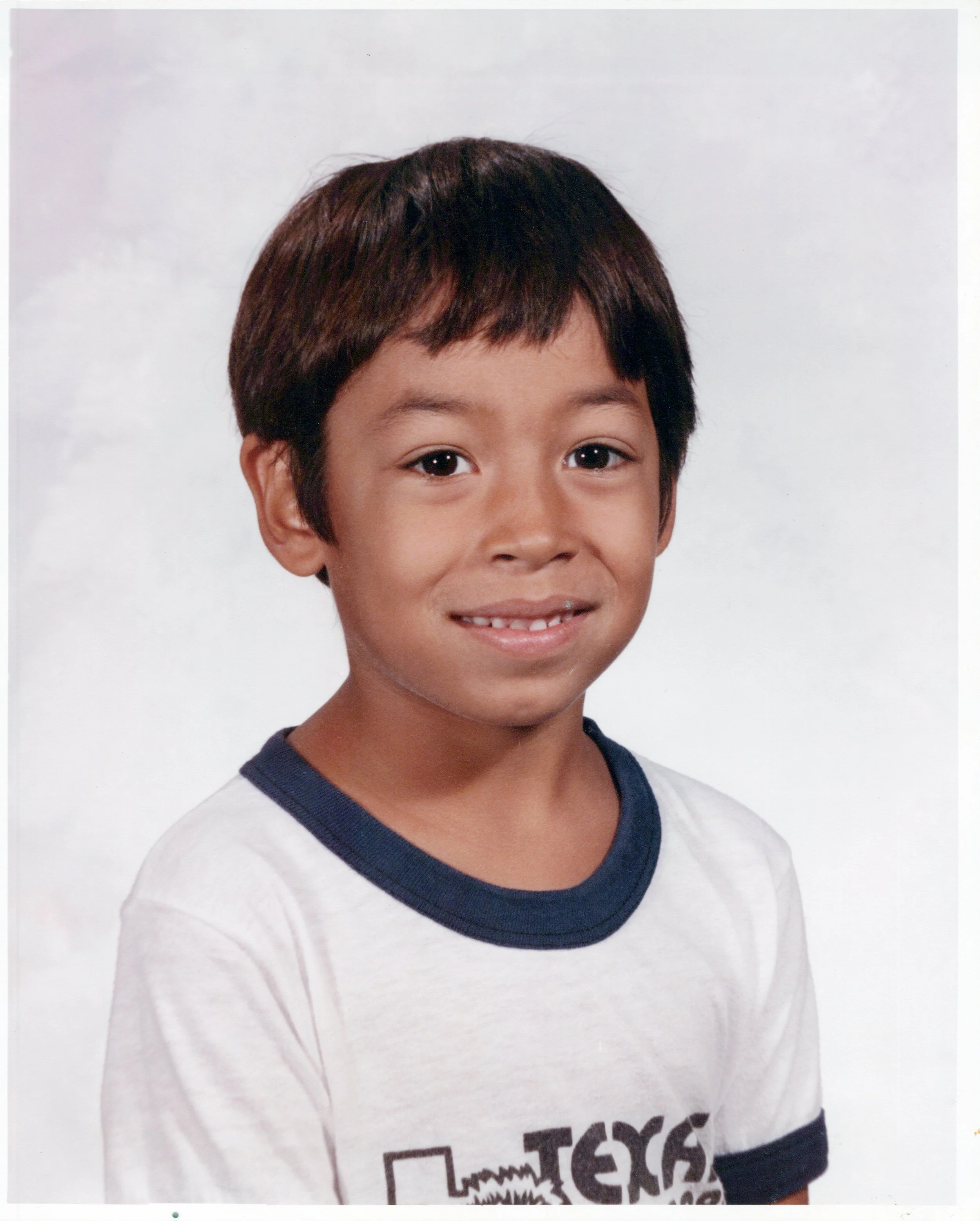
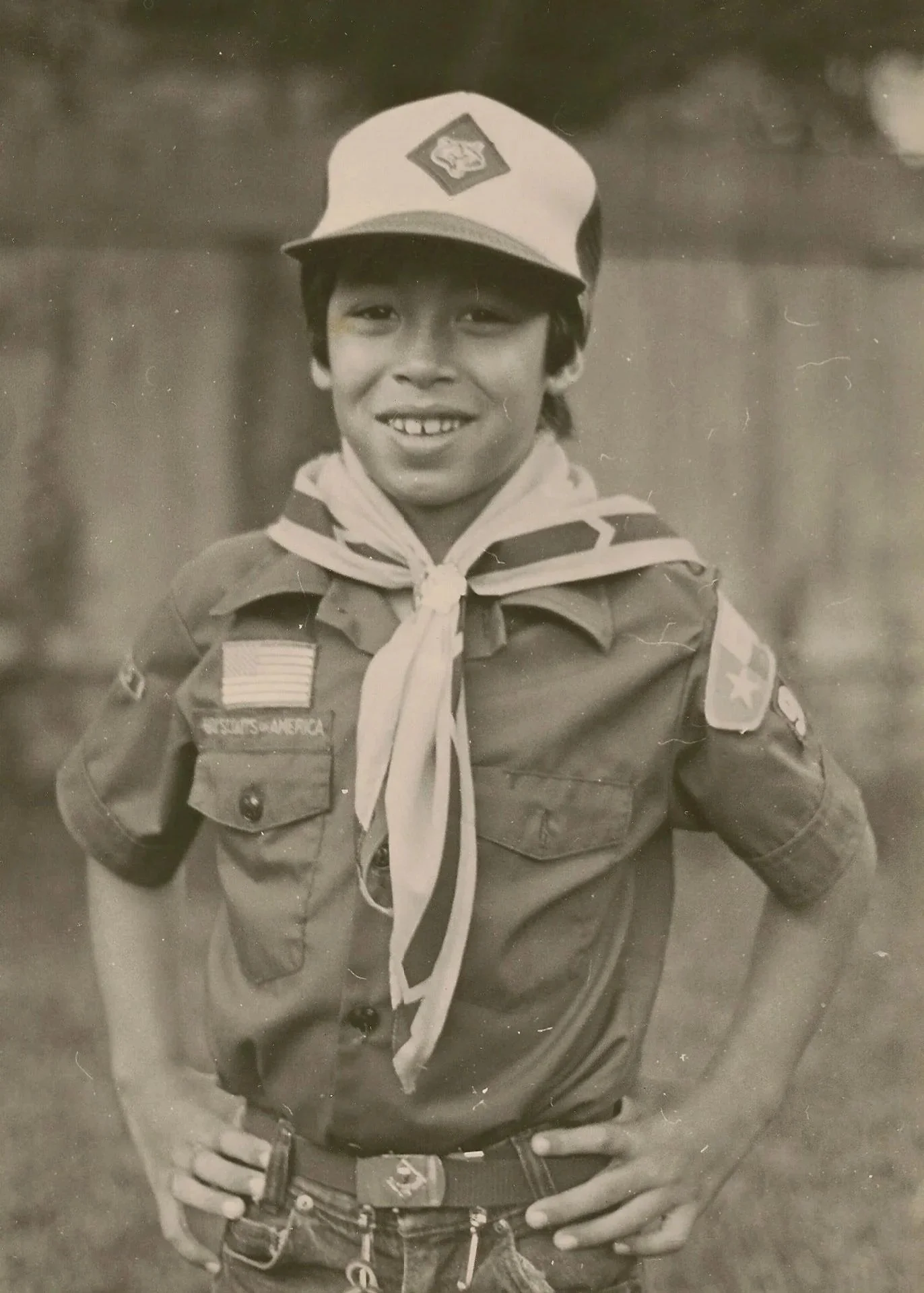
This interview has been edited for clarity. All childhood photos c/o Ron Nirenberg.
How has your experience been here as a teacher since returning to Trinity?
It's a little surreal because it’s been literally 30 years, to the day, that I came to campus for the first time as this fresh-faced, 18 year old student. Being back here, now for the second time — because I came back in ‘09 to work with the radio station — it's interesting, because I'm on the other side of the desk, and I'm being asked to help lead these young students who I can kind of see myself in. I feel a sense of pressure to not let the university down, and to do a good job.
At the same time, it's so inspiring. I feel like it's an extension of the public service mission.
My focus has always been about how we leave the world a better place for future generations, and this is another avenue for doing that, particularly in the kind of class that I'm teaching.
It's also helping me sort out my own head and all the things that I've been through in the last 12 years in public service. So it's been a total, reinvigorating recalibration.
Do you feel like you're trading one set of expectations for another? Is it any easier?
Well, it's a different skill set, in some aspects; some things are staying the same. And so in that way, it's a little harder. I have tremendous respect for the professors and faculty here, and for teachers in general. But the students are incredible.
I mean, they're super engaged, and they believe that they can change the world, and I want to cultivate that: I want to empower them to do that. I'm putting pressure on myself to make sure that I'm helpful.
How do you feel that your skills best cultivate young folks’ belief in their ability to change the world?
I'm a professor of practice, and so what I don't have in educational credentials, I have in experience: professional experience, [and] life experience that I can bring as part of their coursework. The class that I've designed really fits in that space between the theory and research-oriented work that they're doing in urban studies, political science, and international affairs in the real world.
My goal is to connect them with a real, functional know-how, so that students have a deep understanding of how the world should work, and a firm grasp on their values that they’re cultivating here at Trinity. I've said before: I want to empower our students to be actors in the world, not just activists. I want them to be able to use their voice to create change, and know how to do that.
When you were managing KRTU, were you teaching some as well?
So the board of directors of KRTU is the faculty of the communication department. I reported to the faculty. Part of the job of the general manager at the time was to teach a couple of one-hour courses that corresponded to the volunteer work that the students were doing in the station. They got academic credit for working at the radio station, but they had to learn marketing and broadcast management. I taught those classes.
Are you developing the curriculum largely yourself?
I had a conversation with [Trinity University President] Dr. Beasley. I'd been asked to consider teaching, and if I did do that, the first place I would want to do it is at my alma mater. She gave me [free] rein to talk to the provost and design a class around the experiences I've had. That's the purpose of the professor of practice, to bring that professional experience.
Would you say you're a baseball super fan, or is it specifically the Red Sox?
Specifically the Red Sox, but I am a super fan of baseball, yeah.
Are there any observations that you've carried over from baseball in your approach to public service?
I've worked in Jazz, and I've worked in government democracy. I have a deep, abiding love of baseball, you know; my center of gravity has been around America's greatest exports. Baseball, yeah, I guess it comes into the subconscious now and then in the words that I use, but other than my hope springing eternal for optimism about what we're doing in policy and government in general, I don't think it really comes in.
Which artists or albums are you listening to lately?
My favorite band of all time is The Doors, and I listened to the anthology ‘til everybody around me in this campus was sick of The Doors. My parents — my mom, especially — grew up listening to music. She was the president of Cliff Richard’s fan club. She always had music on, and I was always listening to the album, so my musical tastes were always like 20 years behind most of my friends.
I'm listening to a lot of different stuff, but I still am kind of behind the times. One of the bands that I’ve really started to like is called Cannons. It's an interesting sound. I think it's just the phase that I'm in right now; more ethereal, a little bit more electronic. I started listening to The Knife. Oh, and Grimes. Yeah. I think it's just because I was listening to the discovery channel on my iTunes.
Did you get your Spotify Wrapped?
No, I don't have Spotify.
Probably for the best.
I do have [iTunes] music replay, though. If I had Spotify wrapped, it would tell me that I was listening to Cannons. There's also a band called She Passed Away.
Trinity University’s Laurie Auditorium offices overlook Hildebrand, including Nirenberg’s
That’s the band name?
Yeah. It's kind of like German… electronic… metal?
[Nirenberg pulls up a track and begins playing it. I’m reminded of Haddaway’s What Is Love, or a more propulsive Kraftwerk]
Yeah, it's like club music.
You were at the jazz station. Of course it's going to be eclectic.
Yeah, I started listening to The Cars again, too.
I was particularly fascinated by your time at the university newspaper, The Trinitonian. How do you feel like your background in journalism and news gathering helped your career as a public servant?
I've thought a lot about that, and my entrée into journalism was really about sports, but it evolved — particularly here [to Trinity University], and when I got into news. Then as editor, it was really about fact and truth. I've always felt like my heart was still in journalism, even when I was in public office.
I always felt like I had a responsibility to be transparent and objective, and focused on helping people understand the truth behind things; which has kind of made it difficult politically, sometimes. So much of the political world we live in is spin — and perhaps people will say, “well that’s just spin too” — but it really has always been about this pursuit of truth, and that's why I think there's such an important symbiotic relationship between, you know, the Fourth Estate and the work that elected officials do.
And there are boundaries that should be respected. When I was first elected as a city councilman, journalism was still very much on my mind, and I always thought it was fascinating whenever I had interactions with the media. And so I always had a rule for myself that whenever a reporter or somebody from the press called, I never wanted them to go to voicemail, number one. And I never told them what to write, or corrected what they wrote, unless it was about just a fact.
Of course, the call thing didn't work very long. But I've always tried to maintain that boundary, and the people in my office have as well. I think it's critically important: the fact that the state of our political world and our democracy is so fragile right now, is because that boundary has not been respected.
What boundary, explicitly?
You have politicians who are meddling in the content and structure of the press that's supposed to be holding them accountable. Then you also have media on the other side that are trying to play both roles. You have media outlets built entirely around political ideology. Those lines are totally blurred, and I think the result is opening up gaping vulnerabilities in our democracy. To me, they’re two sides of the same coin, in terms of what's protecting the freedom and independence of how this country was established.
May I ask your opinion on AI, both as a private citizen and a public servant?
Opinions still forming. I think it's a potentially powerful tool for knowledge transfer, and making sure we're using information appropriately. But the potential harmful uses are infinite, and alarming. Once again, it's become politicized in the sense that nations now view this as another Manhattan project: who's got to dominate in the space of AI?
I often think about technology. In fact, one of the professors I've studied with in Philadelphia studied iterations of technology, and how, generations from now, people will use AI in the same way we use books to transfer knowledge. That was scary. This is obviously light years beyond that, but it's alarming. I don't think we, as a society, are ready for it.
When genetic modifications were first discovered and experimented [with], there was a rush to have conferences globally about the ethics of doing things like cloning. There doesn't seem to be that same effort here, yet what we're playing with is as powerful, and potentially more destructive. And so, I hope that future generations are not harmed by our lack of a collective ethical boundary related to AI.
Do you think that the environmental impacts have been adequately addressed at all yet or are we just ignoring it?
Certainly the bigger one is Bitcoin mining, which serves, to me, zero purpose for the environmental harms that it produces. So yeah, I don't think we're addressing the environmental harms at all.
Last question about AI. Does it feel inevitable?
Yeah. And I say this as someone who grew up watching Terminator every day.
Who are some individuals that you feel like are doing vital work in the community right now?
First person on that list would be Dr. Adena [Williams] Loston, who is the president of St. Philip's College. She's a legend in the education field, and she's really embraced the idea that education, beyond just degrees, is economic empowerment for the community; she's been a really important ally in our workforce development efforts.
My wife, Erica, is an amazing person you can read about.
Eric Cooper, the CEO of the Food Bank, who I think, in his core, totally understands the issue of poverty and how we solve it.
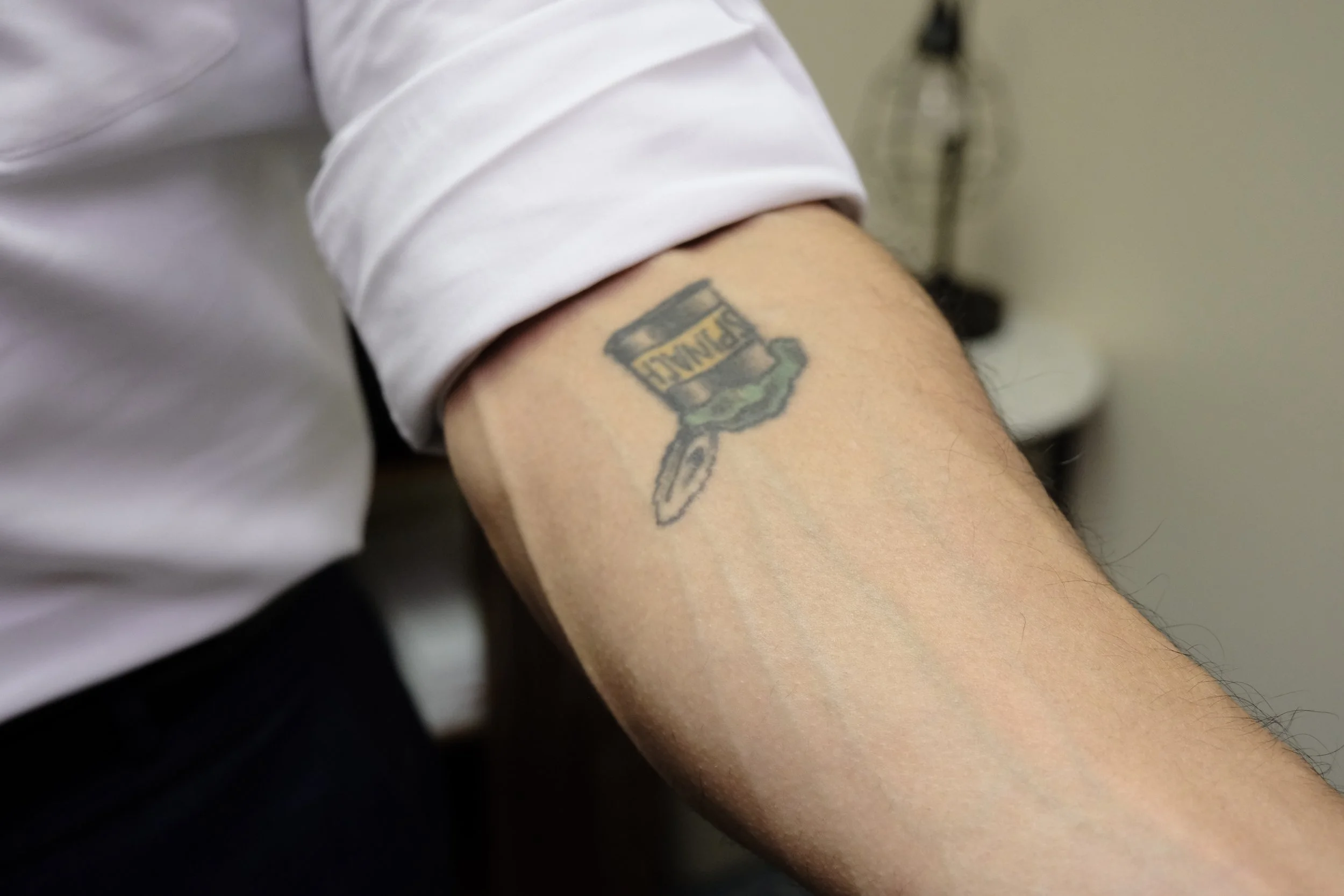
Where's the spinach tat?
*points to left arm* ■
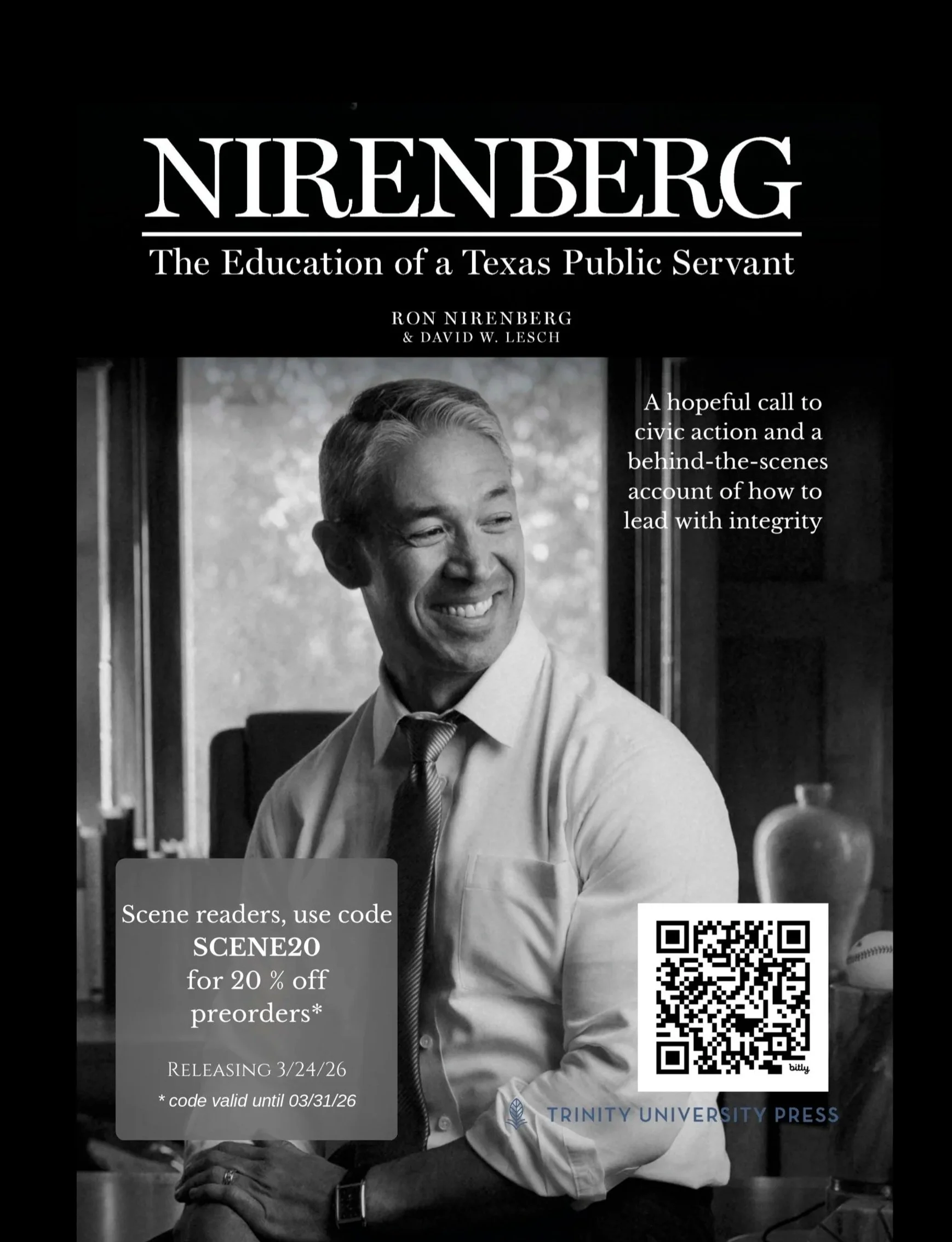
If you’re interested in finding out more about Nirenberg, his memoir, Nirenberg: The Education of a Public Servant releases on March 24, 2026. Scene In SA readers get 20% off preorders with the code SCENE20 at checkout!
