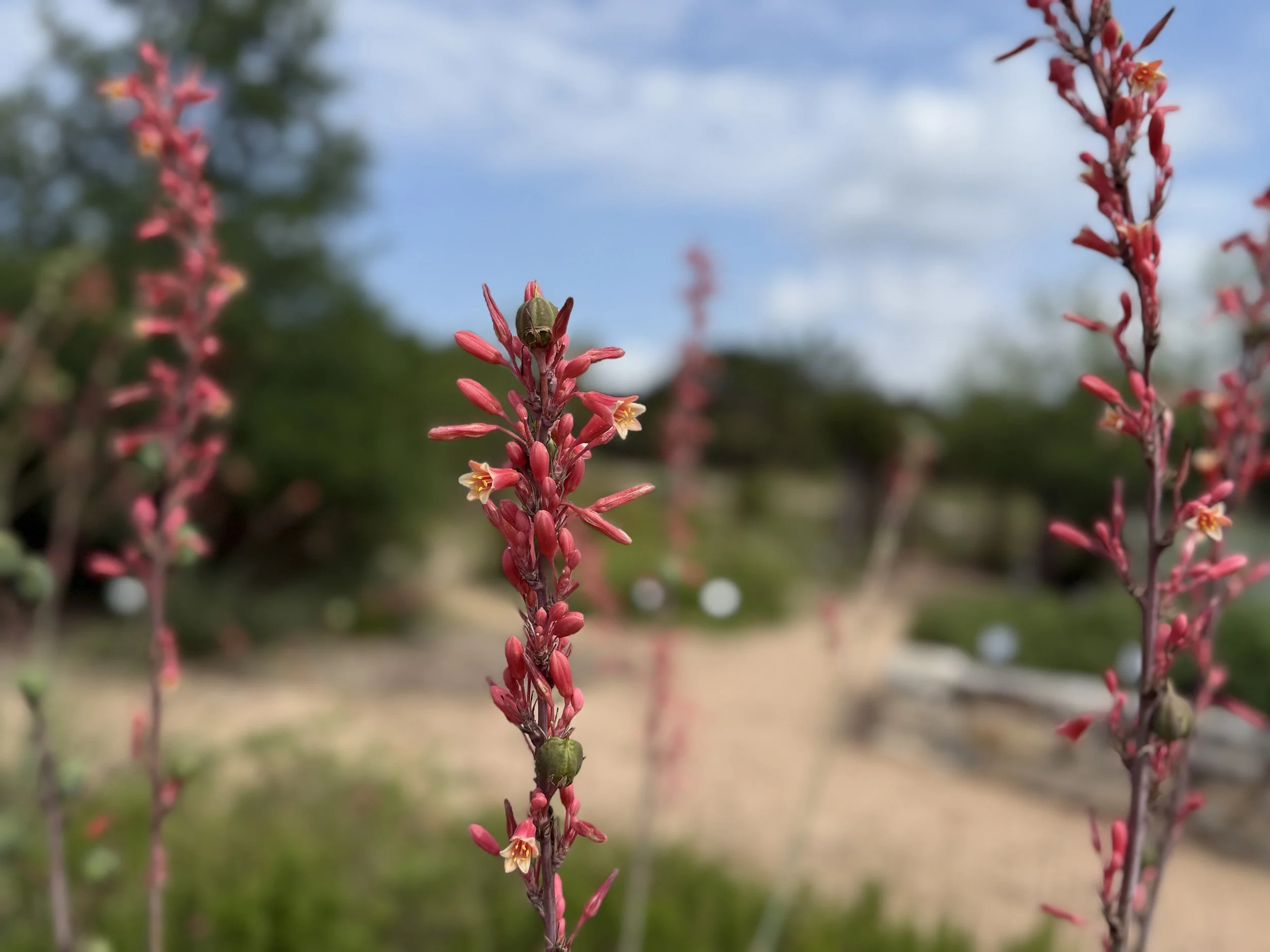

20 years later, beloved former mayor Phil Hardberger shows off ecological gem in eponymous park
By Nick Blevins
Former San Antonio mayor Phil Hardberger, standing in front of “Phil’s Tree”
I pulled off of Blanco road, into the entrance by the dog park. There’s an individual parking spot cradled by mature, shady trees that you can back into, ideal after a long walk, run, hike, or bike. I was there that day to speak with former San Antonio mayor Phil Hardberger about the space that bears his name, and our meeting place was only a short jaunt away, which worked out; it was the perfect day for a walk in the park.
One can easily while away a temperate spring afternoon strolling through Hardberger Park’s 330 acres of native trees, grasses, flowers, and creatures. Excited children enjoy the playground with their loved ones, and pups of all shapes and sizes pad over to the dog park to do the same. Over on the trails, a big spiny lizard may skitter across your path, dashing past a couple white-tailed deer, for the dense coverage of oak and Ashe juniper beyond. And do you hear that mellifluous chirruping overhead? With 181 different bird species sighted as of January 2026 (and 186 at the time of our interview, according to the mayor), there’s no better place to take the aunty or uncle in your life; just make sure to bring your favorite pair of binoculars, of course.
Spanning over seven miles of winding, wooded trails, it’s easy to get suffused in the transportive natural soundscape accompanying their twists and turns, and in the lush, leafy months of Texas spring, glimpsing the top of a car tooling along Wurzbach Parkway through the trees can feel pleasantly anachronistic.
Hi, Phil
I met Hardberger near an outdoor classroom that was presently hosting a training session for four-legged students. Rounding a golf cart, it was impossible to miss him; with his white hair, seersucker suit, and crimson tie, he struck quite a figure, and fully popped from the greens and browns of the surrounding tableau.
The park’s name is well-earned. During his tenure as mayor of our fair city from 2005 to 2009, Hardberger oversaw the affirmation, from a municipal level, of nature’s immense value, applying the long-term planning and resources necessary toward helping ensure that many of the spaces we enjoy today can also be enjoyed in the future. Scene In SA and the former mayor are also no strangers. He and our late founding publisher, John Ziller, went way back; We featured him on our cover 20 years ago.
At 91 years old, the former Air Force pilot, seafarer, and lawyer — who was practicing until quite recently — was a bounty of detailed information on every aspect of the park, from the gallonage of the massive, underground cistern that irrigates the flora along the Robert. L.B. Tobin Land Bridge, to the specific year of the grass seed that grows afield from the urban ecology center; the same as the blades that tickled the bellies of early Texan settlers’ horses, I’m told. The man knows his stuff, and was kind enough to share some wisdom with us once again, 20 years later.
An... Atypical Typical Path to a Park
Hardberger Park opened in May 2010 following a series of hurdles that, in hindsight, seem a little out of order. Following a year-long search across the city for a suitable location, it was the purchase of the Voelcker estate that kicked things into gear.
“They wanted to sell off the land in some way commensurate with their love of nature, and the money that paid for it would go to the care of the very young and the very old,” said Harberger.
The sale of the estate catalyzed the Max and Minnie Tomerlin Voelcker Fund, which in the past year alone has provided millions of dollars in grants to fund research for treatments to cancer, heart disease, and a range of other degenerative conditions.
“I thought, well, that’s a double header for me: I’m getting a park, which I definitely wanted. And they want to do more studies about the aging [population], and well, maybe they’ll put another couple years on me, you know?”
Hardberger received the call in the morning, and he and then-City Manager Sheryl Sculley were on site the same day. Enamored with the location’s vast, pristine acreage previously utilized for dairy farming, everything seemed to be in place; for the price of $50 million. Galled, the pair returned to City Hall to deliberate over the cost, with Sculley researching through the night to determine whether such an expenditure was remotely possible. Receiving a (conditioned) affirmative, Hardberger made the call confirming the purchase.
All that remained was getting the rest of San Antonio on board.
“She and I campaigned all over town,” he said. “Just like I was running for office. Where there was a gathering, I came.” Within 60 days of the “somewhat premature” conversation however, it was done. The city owned the park, and if you’ve driven past, or perhaps visited yourself at any point, you’ll know the rest is history.
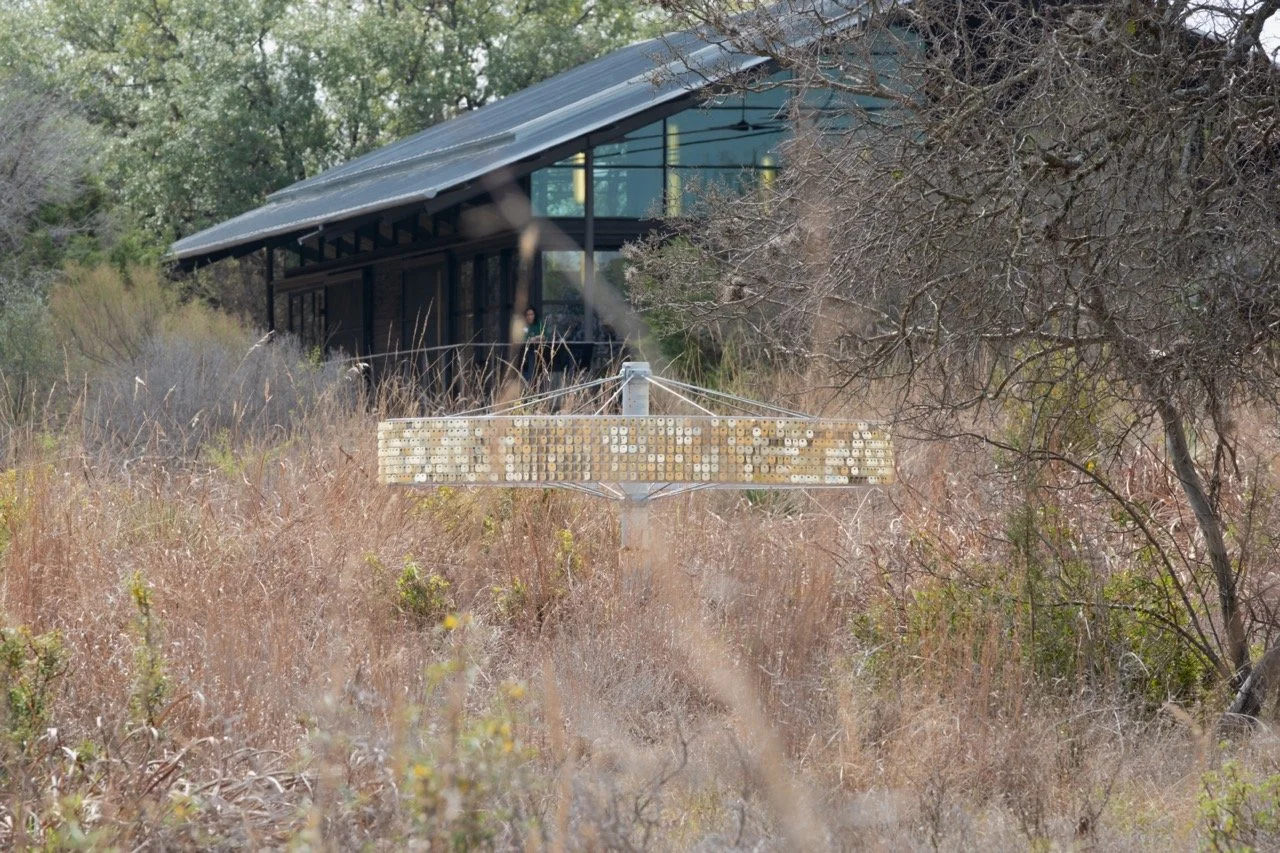
The glittering sequins of Anne Wallace’s Golden Age installation reflect dazzling sunrises and sunsets
A Bridge Between
Hardberger standing on the Skywalk, looking toward the Robert L.B. Tobin Land Bridge
A major addition to the park was the Robert L.B. Tobin Land Bridge. Completed in December 2020, the structure spans Wurzbach Parkway, connecting the east and west sides of the park for visitors, while also allowing for the safe continuity of animal paths that long predated the development of surrounding neighborhoods.
“The need became obvious, because the park extends on both sides of Wurzbach,” Hardberger explained. “Nature’s been supreme, but now you’ve put a big road right through the middle of it; well, that’s no good, because the animals need to cross. This had been one uninterrupted place, all of their lives and their parents’ lives. But suddenly, they can’t go to the other side, because of the freeway. And the freeway was killing a bunch of them that tried anyway.”
Following numerous collisions and animal fatalities, the destination — a means of making the park whole that was functional to humans and animals alike — was clear. But the path remained murky. Proposals included a Texas Department of Transportation-designed bridge (the kind you see stitching the interstate), and even a massive, underground tunnel beneath Wurzbach Parkway. While the TXDOT bridge could’ve done the job, the mayor wanted it to be “commensurate with the beauty of the park itself,” while a prospective underground tunnel posed a more olfactory issue, akin to “the biggest public restroom in San Antonio.”
It was when Hardberger received a book on unusual bridges that everything clicked. Mentioned in its pages were the land bridges scattered throughout Europe.
“The minute I saw it, [I thought]: well, that’s perfect, because we’ve got nature here. We got nature there. Now we’ve got to build something that unites it, and that also looks like it grew there; that’s organic. Which I think we have done.” Along with an accessible, 1000-foot long Skywalk that takes you up through the trees and connects to the top of the land bridge, nature viewing stations for observing the various fauna making their crossing, and a 250,000 gallon cistern that collects rainwater utilized in irrigating the flora along the bridge and throughout the park, the Robert L.B. Tobin Land Bridge — named for late art advocate, judge, and notably snappy dresser — is a compassionate structure for a compassionate city.
Phil’s Tree
On the park’s east side, just off the Water Loop trail, is an inconspicuous little path trailing away into the trees. Follow it, and you’ll find yourself standing before a massive live oak, arms outstretched in welcome. First-time visitors will wander up to the nearby display and find they’ve just completed the Phil Hardberger trail, a birthday gift from his wife and daughter; and are now planted in front of “Phil’s Tree.” Hardberger quickly set the record straight.
“When I look at what’s being called Phil’s tree — and I’m glad it is called that — I do want to make it clear that the tree is older than I am, ” he noted with a chuckle.
The ancient oak played a major role in the development of the park, its majestic spread being one of the prime inspirations for selecting the location. In a way, it perhaps serves as the park’s unofficial mascot, bringing just the right level of energy to the occasion. Two decades later, Phil’s tree remains, offering shade and a bit of respite to those wandering off the beaten path.
A Gift for Everyone
We as San Antonians have in our possession something precious. In a time where massive chunks of our landscape and natural resources (where we derive all of our resources, by the way) are being consumed at a breathtaking rate to make room for data centers that power nothing so useful as the ground we walk on and the air we breathe, having an accessible space to exist among a living environment grows increasingly vital by the day.
Hardberger Park also connects to the Howard Peak Trail System, a series of trails that circle the city, taking visitors through unique neighborhoods, past fascinating art pieces placed at various points along the trails, and within sniffing distance of some delicious restaurants, for when, let’s face it: you need a lil’ snack. Start west at Cathedral Rock park and bike on over, or even hoof it from Hardberger 2.2 miles out to Walker Ranch.
Because of the foresight and intention of former mayor Phil Hardberger, and every environment-minded individual that utilizes the platform they have to advance ostensibly agreeable goals like breathable air and potable water, you’ve got a lot of options here in San Antonio. ■
Update:
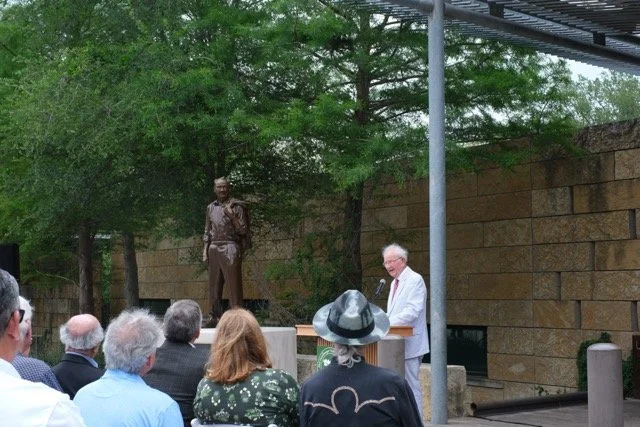
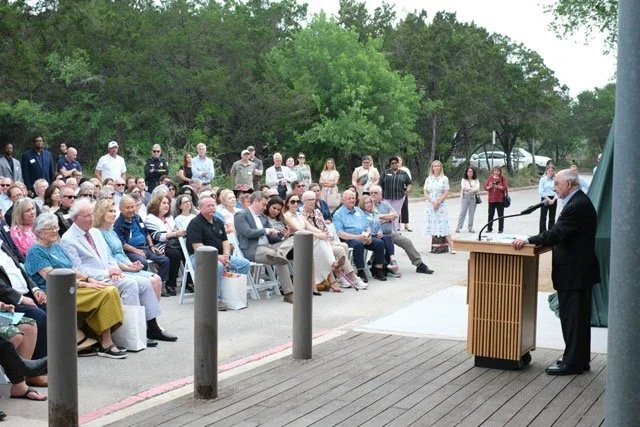
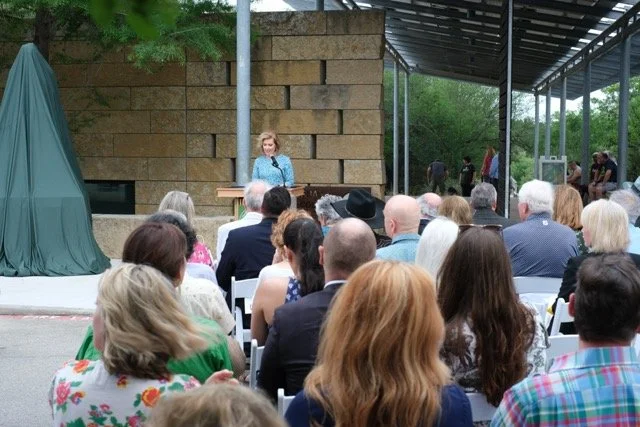
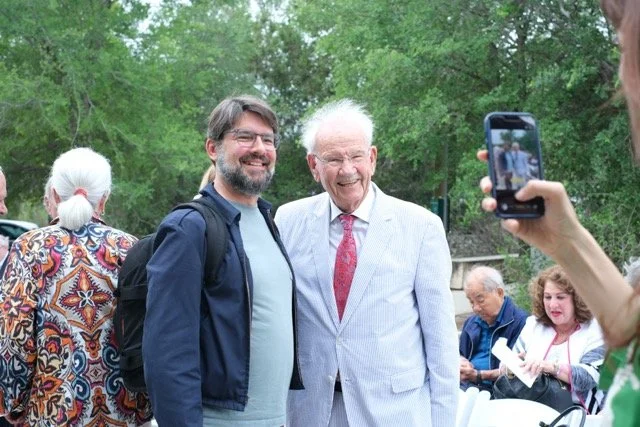
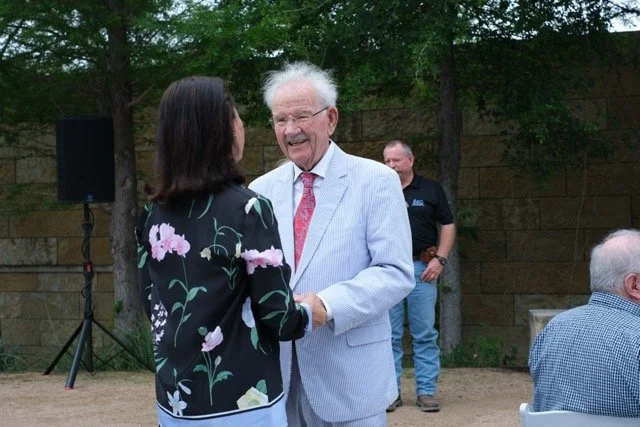
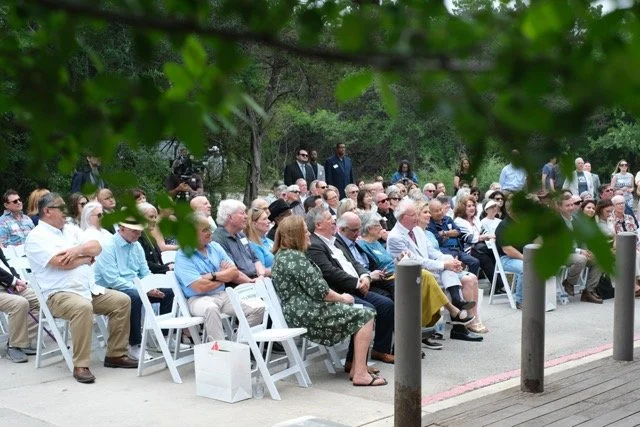
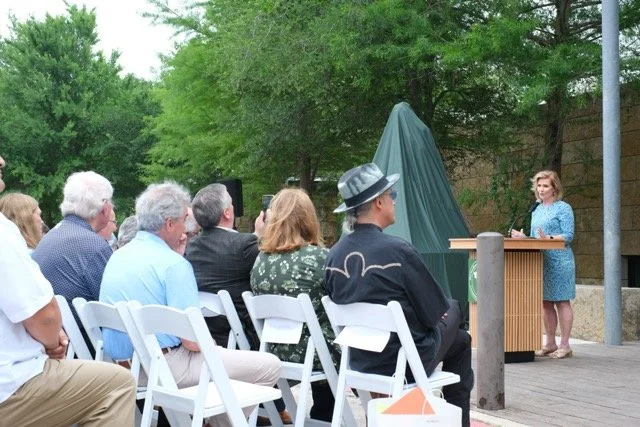
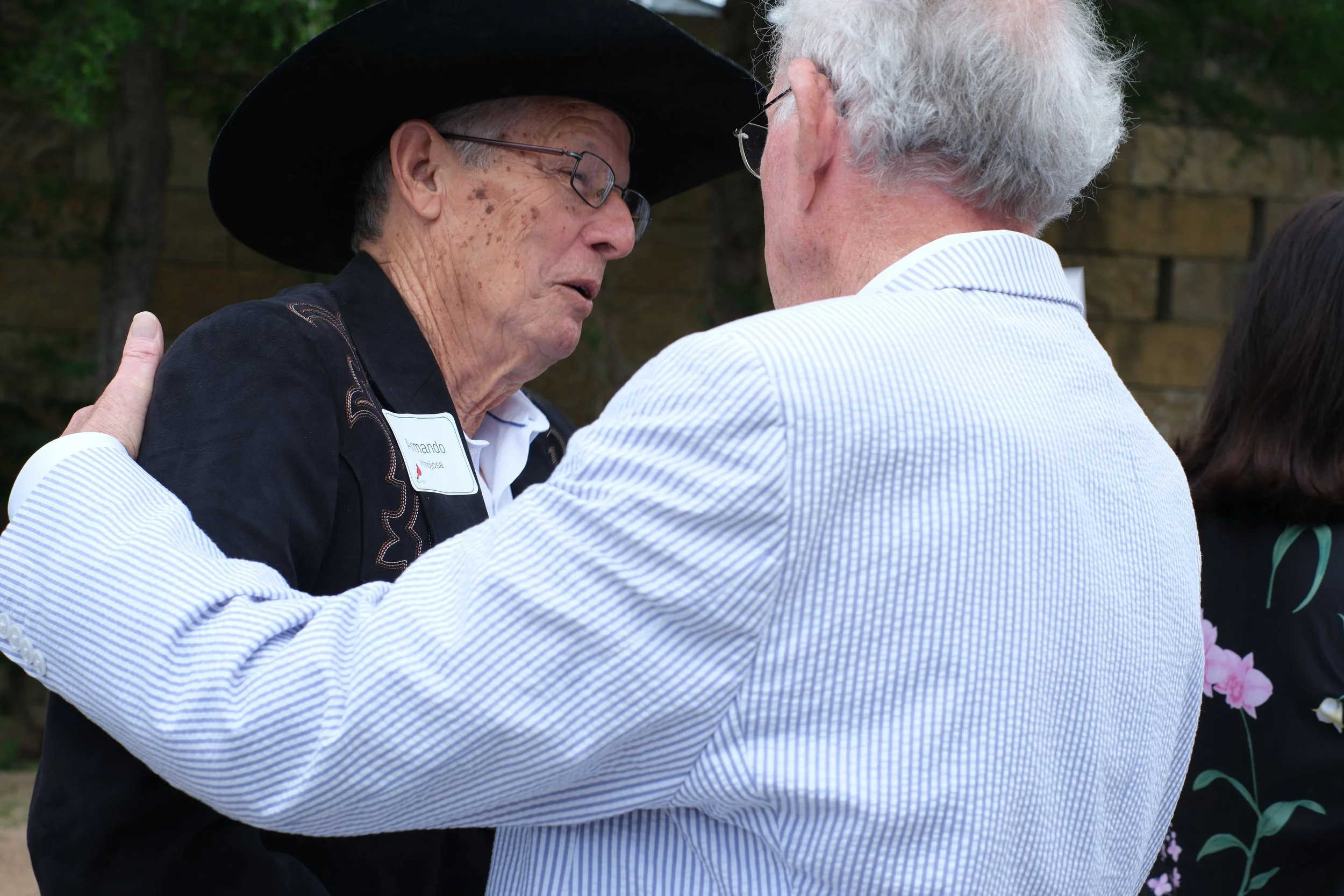
Council members, artists, the chief of police, and more gathered in front of the Urban Ecology Center on Tuesday morning, April 28th for the unveiling of a statue honoring former mayor Phil Hardberger.
Explore Some More
For those eager to explore the park and beyond, the Phil Hardberger Park Conservancy website (philhardbergerpark.org) is a great place to start. They maintain an updated schedule of upcoming nature talks, group walks, and activities for the kiddos.
Now that you’re trail-curious, check out the sa.gov site for more maps, closure updates, and new trail openings!
Did you know we have a sister city in Gwangju, South Korea? Did you also know that there’s a majestic, hand-built Korean pavilion overlooking a tranquil pond, right here in ours? Check out Denman Park, located at 7735 Mockingbird Lane!
The Gwangju pavilion at Denman Park